Category: Musicographic Creativity

  • DubART: Interactive Visual Music

    DubART: Interactive Visual Music

    With this post I want to present an old idea that finally I’ve been developing and starts to work as a web version:

    https://dubart.integral.tools/en

    It is a new audiovisual format between music-video and video-game, where the spectator can become a dub/remix artist. The audio tracks (instruments or musicians) of each song are still separate and the users can do their own remix (or dub version) in a visual way like in a game, or play other remixes (and modify them live). It’s about fostering the Art of Remixing for everyone, without any need to be a musician or technician.

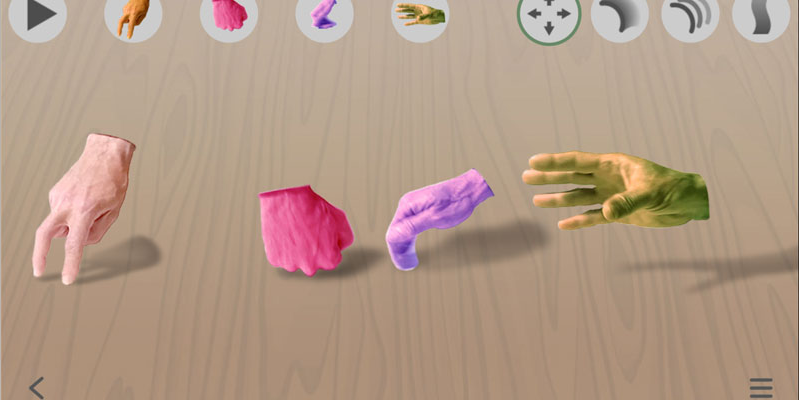
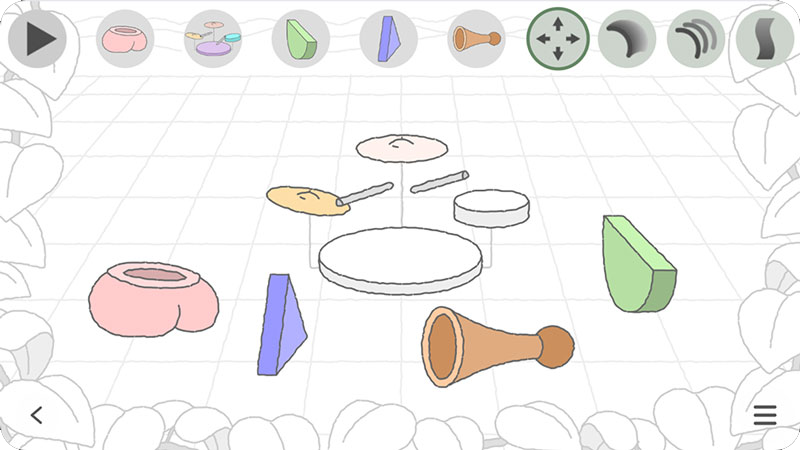
    Every instrument is represented by an agent or animated character, that moves in sync with the notes played (VIM animation), and any user can manipulate those agents easily, hiding/showing tracks (mute), shooting effects, changing volumes and stereo panoramic, both live and also record her/his own version (and edit it) and then share it around (counting views and likes).

    Nowadays is a Web version with 2D graphics that works on many modern browsers and devices, but it can be tuned for low CPU devices (disabling available effects, reducing the graphics resolution, etc). In the future it can be done like an App, video-game platforms, in 3D, virtual reality, etc.

    The invention is not attached to any musical or graphic style, there are many possibilities. Initially I think the first potential users are the ones that already know and love Dub or the art of remixing, but is also interesting as a didactic/ludic tool for music learning, and it has potential in other sectors:

    Can be interesting for musicians and labels as a new interactive format to publish on. The recording studios should be involved because they have the separate tracks, and graphic artists to do the synced animations (I can offer this service), the backgrounds and the icons, etc.

    Also it can be interesting for DJ’s and VJ’s that can use it live (visual dub show). Actually the easiest way to play is in a computer, with one hand in the numeric keyboard controlling the mutes (in/out) of each track and the other hand on the mouse picking effects and shooting them to the animated agents, or dragging the agents on the scene.

    The fact that each user can record his/her own version and share it (counting views and likes) can create an interesting network of online ‘remixers’, where everybody is welcome to participate. Recording a live remix, when finished you can edit each key-frame produced to adjust and polish imperfections, preview the results and save your remix.

    The development of this web version is open-source, collaborators wanted! Any bug you find or improvements you want can be reported in gitlab or just using telegram.
  • Visual Interpretation of Music

    Visual Interpretation of Music

    (text written in 1996)

    The Visual Interpretation of Music (VIM) is a new system to generate images (or other stimuli) based on music. This system starts from a musical artwork (already created) and has the goal to offer a graphic visualization of the same musical artwork. The main criteria of the VIM, Visual Interpretation of Music is:

    The artwork is already done before starting (the chosen musical piece), and the most important is to transmit visually, in the most faithful and approximate way, the same richness and variety of acoustic stimuli (sensations, impressions, emotions, feelings, messages) that the composer and the musicians expressed the day of recording.

    Because its an interpretation, each person imagines it in a different way, so the possible graphic styles are infinite. My personal analysis about the musical and acoustic language (with the intention of translating it to a visual language) is the following:

    The graphic parameters that we can use are shapes, textures, colors or lights, and what is more important (from my point of view): the movements. The image in movement is the more close to music, because is also inside the dimension of time.

    The atmospheres or general ambient that the musical piece suggests, I translate them into a stage or scenery (with defined lights and textures) that changes if the music goes through different ambient parts.

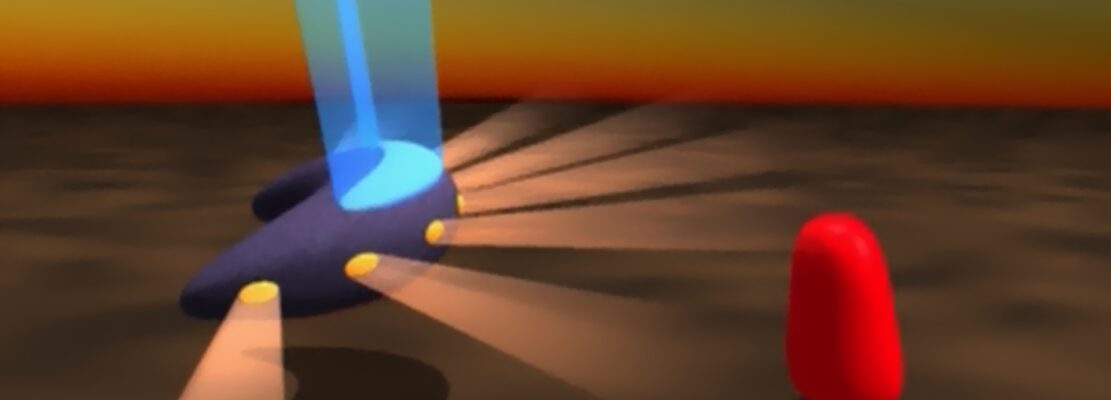
    The type of sound or timbre of each instrument, I interpret it as a shape, object, character or group of shapes that represents the instrument as a different acoustic identity inside the musical piece.

    To express visually the exact notes of a melody or rhythmic pattern, I use movements and colors of the objects-characters that interpret the instruments. The more complex as melody or pattern is, the more simple we need the object shape to allow using movements and colors as main interpretative parameters.

    Movements:

    By means of movements we can describe a path or choreography for an object that interprets visually the melody ‘drawing’ in time and in the scale of frequencies. Also with movement we can describe the percussive sensation of a note with attack or a percussion sound, using a movement more or less abrupt or collisioning. Soft notes will be described with soft movements.

    The possibilities that movements offer allows us, in a melody, to describe different steps (one for each note) inside a choreography, path or melodic draw (using turns, folding, hits, etc). For this reason, the shape of the objects-instruments is conditioned to the movements we want to use, to make them understandable visually. If we want to use rotation movements or turns (e.g.), the shape of the objects has to be enough simple and asymmetric for the turn movement to be clearly understood visually.

    Colors:

    By means of color variations of the object we can describe the variations in frequency or tone of each note.

    The color (or colors) of the object-character, can be changed without affecting the movement, allowing us to deepen in the musical analysis and describe different colors to represent the different parts of each note: attack, duration and ending. Usually the speed at which this three factors happen inside each note, makes the represented synchronized chromatic stimuli to go, some, at a subliminal speed.

    By means of this detailed translation of sound, we approach a bit more to the richness of stimuli of a music. The speed at which, sometimes, the musical notes of the instruments sound, means that the visual stimuli to define or animate are very meticulous and detailed (specially movements and colors), and therefore very often we have to work frame by frame.

    To streamline the production of visual interpretations of music we have to profit from the latest technological advances like the new tools (or plugins) of 3d animation, the automatic application of colors, etc. These tools must allow to use the audio tracks as sources of information, by the different parameters of sound: volume, frequency and timbre.

    The ideal way to generate visual interpretation of music will be by means of a specially designed program or software for this task, grouping tools of already existent audiovisual programs and maybe some new tool easy to develop.

    Examples of Visual Interpretation of Music:

    (updated in 2025)

    TssTak (2024)
    VisualDub, demo (1997)
    Ark de Kolors (TVE 1996) + GasGas (2025)

  • Old flash site 1992-2006

    Old flash site 1992-2006

    Click HERE to see the old flash website: