The Arts of Living
Searching a constructive attitude for a better world
v0.1
(Please feel free to edit or fork this at github.com )
What is Art?
In a healthy and nature-connected human society, all Verbs in any language are considered Arts (essentially or potentially), because if they are not regarded as such, they should be or become arts as soon as possible, for the good of the doer and the good of everyone else. When thinking of any verb, let’s try to add first “the art of …” (the art of cleaning, the art of walking, the art of listening, the art of working, etc).
Any job or activity can become a conscious Art if the doer human wants it. Art is just an Attitude when doing any kind of task. It’s a predisposition during the gerund or actual doing of the verb. The Present is the only thing that really exists, and the gerund is the most important verb-form.
Art is not a result of trained skills being applied to a task, and art is not a theoretical concept. Art is the ability of any being of any culture and any age to sustain an attitude of Enjoying the task and giving the best of her/him-self in the process, trying to Improve both the personal skills and also the outcome result (artwork). The result or artwork should give a sense of satisfaction and happiness not only for the doer but shared with all others.
When the attitude is not of enjoying the process and not looking for improvement, the verb or art can be considered disconnected or empty. It lacks love and the outcome will not be nutritive for human kind. Even worse, if the attitude is from a non-acceptance position, the feelings involved can be resignation or resentment (when is a passive non-acceptance) or there can be emotions like rebellion or resistance (when is an active non-acceptance). All the energy involved in a process is part of the outcome or artwork, it can feed for improvement of human kind or it can poison the receivers with the doer emotions or thoughts (so there’s toxic arts too).
The attitude of Enjoying and Improving is nutritive when who enjoys is the doer’s Conscience (right brain hemisphere, the Unifier), looking for the good of all-one. It gives real satisfaction and happiness, also for others.
When who enjoys is only the doer’s Ego (left brain hemisphere, the Separator) the attitude is a selfish prosecution of having more or achieving personal success, normally not nutritive for all others. The ego can’t achieve never real satisfaction or happiness, is not it’s function (designed to separate, analyze, etc). (more about brain at developing-minds )
The condition of ‘search for Improvement’ is what becomes the training or skill upgrade of the doer human and is also what opens the door for originality or creativity, to Change something in the process trying to improve the results or the task for the good of all. Also the introduction of creativity and changes, helps a lot the other condition of enjoying the task.
Kinds of Art:
The verbs in a language (arts) usually are used to describe Actions (jobs, skills or anything using time) or Relations (between entities, objects, etc):
The Actions or skills can be grouped in two verbs branches: ‘Doing’ (giving, making, communicating, etc) and ‘Not doing’ (receiving, attending, resting, etc) related the outward (outgoing energy) and inward (incoming energy) flows respectively.
Any Relation should also be an Art if it’s not, because is only a matter of attitude and predisposition of the parties, requiring two main conditions: it is Enjoyed and looks for Improvement. To check if is nutritive, it should produce the symptom of happiness and satisfaction to the related parties (when relating beings).
As seen before, we can also shape some adjectives for arts:
There are Nutritive, Full or healthy arts (helping nature, including humans) and Non-nutritive or Empty arts (not helping nature, including humans), depending on the Love being felt by the doer during the creation process. Also exists Toxic arts (charged with fear, etc).
There is also Conscious arts (full or empty) or Automatic arts (full or empty), related the consciousness of the doer agent about all this when performing a verb. Conscious or not, refers only to be paying Attention or not on it. The “unconscious” brain didn’t really exist, it’s a lack of attention. If you put enough attention everything can became conscious right now.
Also the level of skills involved can shape adjectives like Skilled or Non-skilled arts, and many inbetweens (from newbie, initiated, etc to professional or master). Beware that the skills concept is dangerous when is only related the conceptual part or theory about something, is much more trusted any skill level related practical experience (fruit of the factual ‘doing’ to solve real needs, or the direct ‘experiencing’).
The “good” or “bad” valorations are usually subjective and relative to every situation and point of view (cannot be really common). They start as ego-centric sensations as a child, developing into etno-centric values (from cultural constructs inherited from society, the ones pressed-in by the economic interests, to the values of your affinity group, team, etc), and later the good-bad concepts develops hopfully into mundi-centric values (what is good for all humanity). In the best uses, ‘good or bad’ can be related to ‘nutritive or not’, but what matters is ‘for who’: the selfish ego? the affinity group? or the whole human kind? (more about ethics at developing-ethics )
For example, without even realizing rationally, children do art, plants do art, stones do art, water do art, atoms do art, planets do art, etc. All is performing Nutritive Arts except so many disconnected humans (egos), some of which are even skilled artists of manipulating and controlling (even if some ill egos “enjoy” that, they never achieve or give satisfaction nor happiness).
Some examples:
- “The art of creating” or “the art of destroying” something, both can be nutritive (full) or not (empty) for nature, it can be conscious or not, it can be skilled or not, etc.
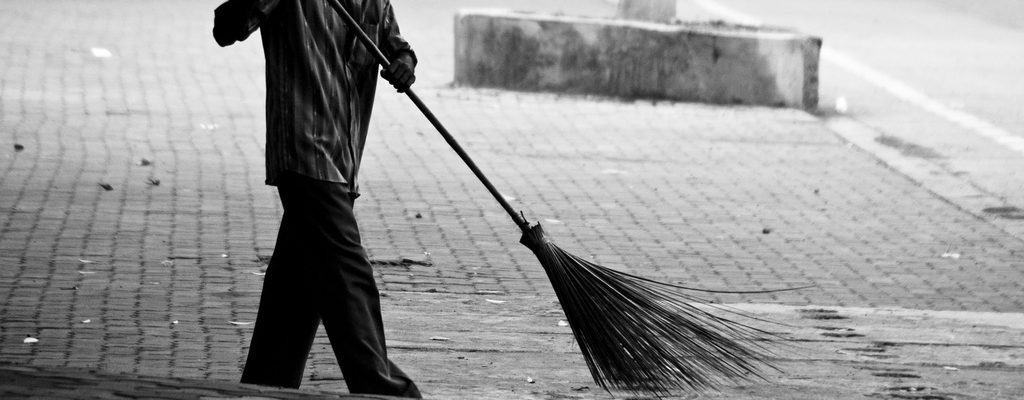
- “The art of cleaning”, can be empty if is not enjoyed or is not searching best results (the artwork). To reach this attitude, you can imagine the non-existent ‘clean’ future result and start looking-for the imagined shape like a sculptor searches the desired shape in a raw block.
- “The art of cooking”, can be conscious or not, and can be full of love or empty. It can also hold dark emotions and produce toxic food, but it can be also very nutritive, way beyond the chemical or physical content (with love feeds much more).
- “The art of killing”, even if enjoyed and improved (there’s weird people), can be very ‘bad’ if is killing say other humans, but it can be ok if killing some mosquitoes in a summer night or getting rid of a plague at home, etc.
- “The art of resting”, is a non-active art (from the ‘not doing’ branch) but you can simply rest or you can instead play the art of resting (recovering more energy better).
- “The art of giving”, only when produces joy for the giver is nutritive to nature.
- …
More about data organization trees at https://github.com/bum2/integral-developing/blob/master/integral-data.md
What is Artwork?
If all verbs are considered Arts, all creations are considered Artworks. Everything done by someone, even if unknown or not human, is an artwork. These artworks (the created things) can be nutritive, empty or even toxic, depending on the attitude of the art Doer.
The attitude of each Receiver will define their singular experience of the artwork. So, as a receiver, anything can be seen like an artwork if we want (even if the Doer didn’t see it as such), and that will make us realize we all produce artworks constantly.
From the kind of attitude doing the arts, the resulting artworks will inherit the love being used, the quality of materials, the level of the skills used, etc.
In the old conception of art and artwork (only done by “artists”, as a subgroup), some “artists” are Communicators of ideas, thoughts or emotions through their artworks. Lately most of this communicators are always signing their artworks. They show their artworks like a blogger publishes his posts and try to reach as much receivers as possible. It’s the structure of a communicator, when you want to express something to everybody.
Some other “artists” are anonymous, doing many things considered artwork and even communicating lot of stuff to a wide audience, but they’re not interested in signing or reveal any personal identity (their ego is not involved). We find many examples in ancient arts, philosophies, spiritual graphics, tribal arts, zapatists arts, anonymous graffities, etc.
In the old conception of art, the “non-artists” were the Makers or Doers (the Workers, which produce the needed stuff for human living and development) and everyone else. No one was an artist apart from an elite. Normal human things were not considered artworks.
Also “non-artists” were the Critics, with such an ego confusion that even a piece becomes or not an artwork depending on the consideration of the critic.
In the new conception of Art and Artwork, everybody is an artist and everything can be seen as an artwork (even if we don’t like it). Every art will have skilled masters which can teach to others about techniques, materials, tools, etc. Everybody can do healthy artworks in every thing, as long as they want.
Everybody can Communicate ideas (which is another thing) whenever they wish using any art to produce any artwork, but these ideas can be understood or not, nutritive or not-nutritive for the receivers.
Everybody will need to self-filter the receiving of people’s messages inserted into their artworks, prioritizing the more nutritive (if they want to be healthy). Also we all will need to self-filter the artwork itself (apart from the optional “message” inserted) in terms of Quality or using the ethical values related our actual point of view or development stage. To be healthy, “quality” is first (the Values) and “quantity” is useful but secondary (the Success), as explained in developing-ethics .
The challenge of structuring Artwork Types from an integral perpective is being done at https://github.com/bum2/integral-developing/blob/master/integral-data.md .
Who is an Artist?
Everybody and every being is an artist. Some humans didn’t recognize themselves as being artists, but that is a trained program to move humans away from the healing internal forces.
The separation of artists and non-artists was very helpful for the intellectuals and aristocrats to build more separation and power over other humans. The so called ‘Fine Arts’ were perverted into a stuff for high-society only. You can only learn ‘arts’ if you have enough money, a complete nonsense.
Art is every job, and to became an better ‘artist’ you just need to help (usually earning instead of paying) an admired professional or skilled artist of the desired art.
All knowledge was transformed into a market (like health, investigation and everything else) where a manipulated and filtered set of information is placed ‘for sell’ as a commodity.
In a healthy world, information is totally free for everybody and not censored nor suppressed. The practice is gained by working, helping a more skilled person when doing the community needs.
Some artists (people) are somewhat lost in their paths. Some don’t achieve their artistic attitude, so they perform empty arts (without love), producing empty artworks or even worse.
To reconnect with the internal artist of everyone (consciously), is required a lot of Attention. When we pay attention or listen to something (external or internal) we automatically stop the inner monologue. When you stop the inner talk (left hemisphere) there’s some room for the non verbal mind (silent or visual, musical, etc) of the right hemisphere (the Conscience). The conscience mind (which searches unity) is required to make healthy and nutritive artworks from your arts, enjoying the process and giving joy with the results.
“The art of living is the art of learning how to look”